


Consider incorporating interactive experiences at home that encourage children to participate in various exercises designed to develop their abilities. These engaging formats not only help them express themselves but also build essential foundations for future interpersonal interactions. Offering a diverse range of activities allows children to adapt comfortably while exploring new ways to communicate effectively with peers and adults alike.


Experienced educators emphasize the importance of imagination and creativity, using these tools to unlock a child’s potential. By taking a proactive approach and utilizing a token system or clues within the games, children are motivated to engage more deeply. The flywheel effect of these practices ensures that with each effort, they become more proficient in listening and cooperation, thus celebrating their progress along the way.
To help you get started, this article provides a thoughtfully curated list of twenty stimulating pursuits. Each one not only focuses on the topic of developing interpersonal communication but also includes opportunities for children to face uncomfortable situations productively. With a focus on health and social interactions, these exercises highlight the very best ways to make learning enjoyable and impactful.
Understanding the Importance of Social Skills for Children
To foster healthy interactions, it’s crucial for children to engage in activities that promote teamwork and communication. Incorporating these elements into their daily routine allows them to feel more comfortable when navigating social situations. For instance, playing games that require cooperating with peers can effectively enhance problem-solving abilities and boost their self-esteem.
By introducing various exercises in the classroom, such as role-playing or group projects, educators can help students practice attentive listening and improve their ability to express themselves. This engagement in a supportive environment leads to excellent coping mechanisms when faced with challenges, whether in school or during play. Parents should encourage their children to participate in these types of learning experiences from kindergarten onward.
Moreover, using everyday situations to reinforce these concepts can be beneficial. For example, parents might organize scavenger hunts that require their child to communicate effectively with friends, thereby enhancing their interpersonal skills. These real-world applications assist kids in understanding how to interact positively with others and contribute to their social development.
Books, such as “How to Talk So Kids Will Listen & Listen So Kids Will Talk,” can also serve as excellent resources to provide guidance on supporting children’s communication skills. Engaging with these materials allows both kids and parents to explore different ways of expressing thoughts and feelings, ensuring they feel empowered in various situations.
In summary, enhancing children’s ability to interact socially is foundational for their growth. Whether through structured curriculum or fun, interactive play, promoting these skills can lead to long-lasting confidence and better relationships in their lives.
How Social Skills Impact Academic Performance

Proficiency in interaction can significantly influence a child’s schooling. When children grasp the nuances of emotions and cues from their peers, they are better equipped to engage in group projects and discussions. This understanding really strengthens their communication abilities and can lead to a more productive learning environment.
For instance, a child who feels comfortable talking in class can express their thoughts more freely. This unique confidence can enhance critical thinking skills, allowing them to build on ideas and participate actively. Conversely, children who avoid interaction may miss important social dynamics that often matter in collaborative settings.
Teaching responsibility throughout childhood also contributes to academic success. When children understand the importance of their role in group work, they learn to manage their time and commitments better. For example, using resources like educational board games can provide opportunities for kids to practice working together while having fun.
Encouraging children to maintain a journal can help them process their emotions and thoughts. Writing regularly aids speech development, enabling them to articulate their ideas more clearly. This practice not only enhances their writing skills but also their ability to express themselves vocally.
Interaction with peers is essential. Children who actively engage with others throughout their schooling years often develop a deeper understanding of the subject matter. Moreover, being able to manage their feelings during discussions or presentations can create a more supportive and attentive classroom atmosphere.
Ultimately, building these abilities can be an ongoing process. If a child struggles, it’s okay to step back, reflect, and work on these aspects at their own pace. Remember to provide encouragement and celebrate small victories along the way!
Connections Between Social Skills and Emotional Well-being
Developing a positive trait such as empathy can significantly enhance emotional health. Children who nurture their ability to understand others often find it easier to handle challenging social situations. For instance, a child who practices listening intently while a peer shares thoughts demonstrates readiness to engage on a deeper level.
Using a journal can facilitate this learning process. Encourage kids to write about their experiences with friends or classmates. They can reflect on moments when they felt happy or sad, helping them read and understand their own emotions better. A good journal for this purpose is the “My Emotions Journal” available on Amazon, which guides them through expressing their feelings.
Group interactions are essential; activities that promote teamwork teach children valuable lessons. When kids collaborate, they learn how to manage conflicts and celebrate successes together. This is a crucial skill that helps build their confidence. Board games like “Hearts for Hearts” from Amazon offer opportunities for kids to practice these interactions in a fun and engaging way.
Online platforms can also provide additional support. Many educational websites offer interactive exercises to help children develop their communication capabilities. For example, they can interact with virtual peers or participate in role-playing scenarios. This kind of practice is vital for honing skills that are directly linked with emotional well-being.
Ultimately, teachers play a pivotal role in supporting this journey. They should encourage students not to shy away from expressing themselves. By fostering an environment where every child feels comfortable, educators can help improve emotional resilience across the board.
The Role of Play in Developing Communication Skills
Turning play into a routine helps children express their feelings more openly. Playing games or engaging in sports allows them to practice using words to describe emotions or situations. Throughout these activities, they learn to adapt their communication style, whether they are cheering for a teammate or negotiating rules with friends. This provides a beneficial platform for refining their expressive abilities.
For example, organizing playdates is a great way to encourage interactions among peers. During these gatherings, children often face difficult situations where they must communicate calmly and clearly. Whether it’s deciding what game to play or resolving conflicts, these moments are valuable for developing verbal and non-verbal communication techniques.
Adding structured games can also aid in this process. Consider using tools like the “Talking Tokens,” which allow each child a turn to express their thoughts without interruptions. This token approach can help kids learn to listen attentively and respect others’ perspectives, ultimately fostering a cooperative environment.
Ultimately, through these playful interactions, children learn everything from basic conversation to emotional intelligence. The connections made during these moments produce long-lasting relationships and enhance their ability to communicate effectively in various settings.
Activity-Based Approaches to Enhance Social Skills
Consider introducing role-playing contests in your classroom. For example, assign students different roles to act out, allowing them to explore scenarios that might happen in real life. This approach can improve their ability to navigate relationships and foster better understanding among classmates. Providing clues about their characters can encourage creativity and critical thinking, while also giving every child a chance to shine.
Another engaging option is using board games that require teamwork and strategy. Games like “The Game of Life” or “Clue” can be excellent tools for practicing communication. In these settings, students learn to negotiate, make decisions, and develop friendships, which are vital for their emotional intelligence. Make it fun by introducing a rolling dice element where the winner shares their favorite music-making experiences or a fun memory. This can stimulate discussions and strengthen bonds.
Music-making activities might also be particularly effective for children with autism. Engaging in group music sessions encourages collaboration while allowing them to express themselves artistically. Adding structure to these sessions, such as assigning specific musical roles, can help kids develop confidence while working together toward a common goal.
Don’t forget to emphasize the importance of giving positive feedback during these exercises. It’s essential to recognize small wins and encourage students to share their experiences. These interactions help them understand the value of relationships and how to navigate them successfully. So, please consider these methods when planning your next class or gathering! Remember, making learning enjoyable is key!
Group Games That Foster Teamwork and Cooperation
One effective way to enhance teamwork among children is by introducing them to collaborative activities. For instance, a group can play a game where they navigate a “wild” obstacle course. They must work together to decide how to overcome each challenge, thereby fostering communication and an understanding of each other’s strengths. The difficulty can vary based on the age and competence of the participants, allowing everyone to feel included.
Creating a “gesture relay” is another excellent option. In this game, kids take turns making gestures while others guess what they are trying to convey. This promotes calm interaction and builds the ability to express themselves non-verbally. Parents can join in too, which helps strengthen contact between kids and adults, encouraging support and collaboration across different ages.
For parents looking for products to facilitate these activities, consider items like the Giant Jenga Set or Laser Tag with Team Play Modes available on Amazon. These games not only require teamwork for success but also make the experience enjoyable. They help children learn the importance of cooperation while having fun. When they talk about their experiences and the strategies they used, they’re doing more than playing–they’re building social bonds and enhancing their capacity to collaborate.
Ultimately, the focus should be on fostering an environment where kids can comfortably express their needs, whether through play or communication. By emphasizing understanding and support, you’re laying the groundwork for lasting friendships and effective interaction skills among peers.
Role-Playing Scenarios to Practice Conversations
To enhance conversational abilities, therapists can use role-playing scenarios. This method allows children to practice interactions in a safe environment. By incorporating elements of play, such as introducing a prop like a ball, these exercises become engaging and enjoyable. For instance, participants might pretend to be at a playground, initiating discussions about sharing toys or playing games together.
These interactions can encourage children to join in on discussions and learn vital communication strategies. The following narrative might involve characters like Simons, who navigates friendships, helping participants understand how to express feelings and listen actively. By cooperating with peers in these situations, kids practice taking turns and responding appropriately, which builds their confidence in real-life dialogues.
Teaching through role-play not only fosters communication but also cultivates empathy. For example, using toys or scenarios from Amazon, such as a “Talk It Out” card game, promotes interactive learning. This game encourages players to engage in various scenarios, giving them the chance to practice problem-solving and expressing emotions effectively.
In these role-playing exercises, children can explore various social situations by acting out different roles. This method helps in understanding diverse perspectives while reinforcing positive interactions. Practicing such scenarios regularly significantly enhances listening skills and boosts comfort during real conversations.
Arts and Crafts for Non-Verbal Communication
Engaging in arts and crafts can help children express themselves without using words. For example, creating a collage with images and textures allows kids to manage their emotions and share their thoughts. Using materials like colored paper, fabric, and even natural elements from the garden can spark creativity while teaching children the responsibility of handling different supplies.
Choose projects that encourage impulse control and focus, such as painting or sculpting. These activities not only enhance fine motor skills but also enable kids to take their time and think through their choices. Look for professional-grade art supplies like Crayola art sets available on Amazon to ensure quality and durability, which can make a significant difference in the final product.
Creating unique pieces of art can help develop friendships among children. Collaborative projects, such as crafting a large mural, require teamwork and respect for each other’s ideas. Promote excellent communication by encouraging them to discuss their visions, even without words; this can lead to strong bonds and a deeper understanding of non-verbal cues.
Start early with simple crafts that require minimal instructions. For instance, using modeling clay can help young ones express their ideas freely and improve their handling skills. Providing a safe space for creativity lets children know they can explore everything without fear of judgment, leading to a lifelong appreciation for artistic expression.
Questions and answers:
What are some effective social skills activities for kids to improve their confidence?
There are various activities designed to help children boost their confidence and social skills. For example, role-playing games allow kids to practice different social scenarios in a safe environment, helping them build self-assurance. Another great activity is team sports, which not only encourage cooperation but also help kids learn to communicate effectively with peers. Storytelling circles are also beneficial, as they promote listening skills and encourage children to express themselves in front of a group.
How can games help children develop communication skills?
Games can play a significant role in enhancing children’s communication skills. For instance, collaborative board games require players to discuss strategies and share ideas, prompting verbal interaction. Similarly, charades or Pictionary encourage kids to express thoughts and feelings non-verbally, boosting both verbal and non-verbal communication skills. These activities create a fun atmosphere where children are more likely to engage and practice interacting with others.

Are there specific age groups that benefit more from social skills activities?
Yes, different age groups can benefit significantly from tailored social skills activities. Younger children, typically ages 4-7, may thrive with simple cooperative games that promote sharing and turn-taking. As kids grow older, around ages 8-12, they can handle more complex games requiring strategic thinking and negotiation. Teenagers can benefit from activities that involve group discussions and leadership roles, as these help them navigate social dynamics and prepare for more advanced social interactions in their future.
What are some signs that a child may need help with social skills?
There are several indicators that a child might struggle with social skills. If a child frequently avoids group activities, has difficulty making friends, or shows signs of anxiety in social situations, these may be signs they need support. Additionally, if a child often misunderstands social cues or has trouble initiating and maintaining conversations, it could be helpful to introduce them to structured social skills activities to practice and improve these areas.
Can parents facilitate social skills activities at home, and how?
Absolutely, parents can play a crucial role in facilitating social skills activities at home. Simple activities like hosting playdates can provide a platform for kids to practice interacting with peers. Parents can also set up family game nights with board games that promote discussion and teamwork. Another idea is to encourage children to perform skits or storytelling to boost self-expression. By creating an open and supportive environment, parents can help their children feel more comfortable practicing these important skills.

Other Articles


12 Comments
Comments are closed.


A Multi-Game Comparison. Plenty of people have done an admirable job of explaining the games in their reviews, so this is instead an attempt at a comparison between a number of games, the pros and cons of each and which may suit different people best. The games in question are: Carcassonne, Settlers of Catan, Castle Panic, Smallworld, and Forbidden Island.We have had Settlers of Catan and Carcassonne (with a number of expansion packs) for quite a few years now, and only recently added the other games above. We usually either play just as two adults, or with our two older children (age 9 and 8), and so our conclusions are based on how these games work in those settings. So here’s what we’ve found:Settlers of CatanWe got this around the same time as Carcassonne and initially just didn’t latch onto it. Partly it’s that it’s supposed to be 3 players or more, and we often play as just two of us. Once we found online some instructions for playing as 2 players it came out more often, and as time’s gone by it’s become fairly 50-50 whether we play Settlers or Carcassonne on a quiet night in. The choice will usually depend on how much we want to think. With Settlers, you’re always planning and calculating; with Carcassonne, you’re taking it a card at a time.Who should get it: Settlers is well-known as one of the great modern games. I’m not as sold on it as some people, and it takes quite a while to learn and feel comfortable with, but once you get the hang of it, it is an entertaining and enjoyable addition to a games collection. There are several 2-player rule variations out there if you need them and they work well (we found one that worked for us and we’ve stuck to it). But this isn’t a game for kids; I would suspect not until they’re 16 or so. Amongst other things, I think they’ll find it too dull.CarcassonneThis has been a favorite for years now, and everyone we’ve played it with has gone off to get it themselves. We usually play without farms because it then becomes less directly competitive and more sociable. Kids can play it, adults can play it, it’s relaxed, it’s fun and it’s simple to learn. Here’s one nice thing about it: you don’t have to be constantly thinking and planning ahead. You don’t know what card you’re going to draw next time, so you just play one card at a time. You’re encouraged to discuss where to put a card, and since you don’t know what piece you’re getting next, your comments to another player are usually pretty unbiased.Who should get it: In my experience, pretty much anyone, except those who want ultra-competitive games. The first few expansion packs are also well worth getting, but don’t bother with anything from Mayor onward.Castle PanicThe kids love this one, again it’s simple to learn and it has the added bonus of allowing them to get out their aggressive instincts and go postal on monsters! They don’t like the `master slayer’ option, but prefer just straight cooperative play. After the first few plays, I’ve found the basic game is too easy, and so we’re experimenting with making it more challenging, such as starting with no walls, or drawing 3 monster cards at a time instead of 2. I think Castle Panic will become a game that we get out pretty regularly to play.Who should get it: People with kids, who want to play cooperative games. Could be fun as a party game too!SmallworldWhile the kids have enjoyed playing this, I think their interest is starting to wane already. I suspect it will work better as a game with a group of adults, or when the kids are older. It has a lot going for it, especially the creative cards and board, but as others have noted – what’s with the box for the tokens? Very poorly designed and adds unnecessary annoyance. Most of the time when playing we’ve found it’s not too directly competitive, it’s easier to attack lost tribes or declining races, so generally it doesn’t get too personal!Who should get it: I think this would make a fun addition to a games collection, but I don’t think it would be a go-to game, especially with kids. The rules are more complicated to learn and explain than the other games, and this makes it hard to just sit down with new players and get on with a game. Having said that, we’ve enjoyed playing it , and I think it’ll get pulled out every now and then over the years.Forbidden IslandAlthough the kids would prefer Castle Panic, when we’ve played Forbidden Island (at my insistence!) they’ve thoroughly enjoyed it. As the island starts to collapse in a heap toward the end of the game, the tension levels rise and people are on the edge of their seats! The game always ends with voices rising in pitch and tension as cards get turned over – it’s fun! It’s a pure cooperative game, and that works well for us as a family – no one feels bad, we’re all in it together. We’re still using the `Normal’ level of play, maybe we’ll notch up a level soon!Who should get it: If you like cooperative games, I think this is excellent to have. I love how easy it is to set different difficulty levels, and it’s definitely the game that’s had the most excited tension – Castle Panic has this at times, but not sustained (at least as the basic game). It doesn’t have the whole monster thing going for it that Castle Panic does, and I think that’s why the kids haven’t latched onto it so quickly (kill trolls or wander round an island getting treasure – which is your average kid going to choose?) but I suspect that long-term it’ll have more staying power.
Simply one of the best co-op Euro games out there. Forbidden Island sounds silly. Heck, it kind of looks silly. But what it lacks in instant appeal, it makes up for in gameplay. The set itself is in a nice metal container. The island tiles are heavy cardboard and the artifacts are nice quality rubber or plastic. The cards are typical, decent quality.The game has a variety of difficulty levels and is suitable for a wide range of ages and skill levels. Since the game is cooperative, younger or newer players can get assistance from other players. The object of the game is to collect all of the artifacts, four total, and escape the island before it sinks. There are up to six players, but even as a two player game it is quite fun. You can limit the amount of interaction if you like, or you can invite everyone to voice opinions as to your next action.You set up the island tiles randomly in a star like grid. Each time playing is unique, which is part of the fun. You then take turns around the board. Each player draws a card to determine what player they are. Each player has a unique ability such as the ability to move to any space on the board, or shore up two island tiles for only one move and so on. You can pick outright, but I find choosing randomly to be more fun.Each player takes three actions: move, shore up, trade, or collect artifact. Then the player draws two treasure cards, keeping up to five in their hand and discarding extra. If you draw a water rise card – uh oh! – the water level goes up and the game gets more challenging. The next turn is to draw flood cards equal to the current water level. You then flip the tiles indicated. If a tile is flipped already, then it’s lost forever! So players want to make sure and shore up certain important tiles when they get flooded (flipped over).The game is over when all of the players collect the artifacts (combined for all four, not everyone will have an artifact), return to the helipad (Fool’s Landing) and use an airlift card. Other ways the game ends is if a player is stuck on a tile when it is removed and there are no other adjacent tiles to swim to; or if Fool’s Landing is removed; or if both island tiles containing an artifact which has yet to be collected is removed. On lower difficulty settings, it’s quite easy. It gets more challenging as you start the water level higher. You can also remove a couple of special treasure cards such as the helicopter and sandbags (make sure to leave at least one helicopter or you can’t escape!)It’s a quick game lasting around 30 minutes on average. The cooperative style is very fun. I find it to be a good in between game – that is a game between longer games such as Dominion, Carcassonne, or Race for the Galaxy. It’s great for friends, and it’s easy to learn. What’s great also is that as long as one person knows how to play, you can instantly dive in with newbies and assist them in the first couple of plays through.Highly recommended!
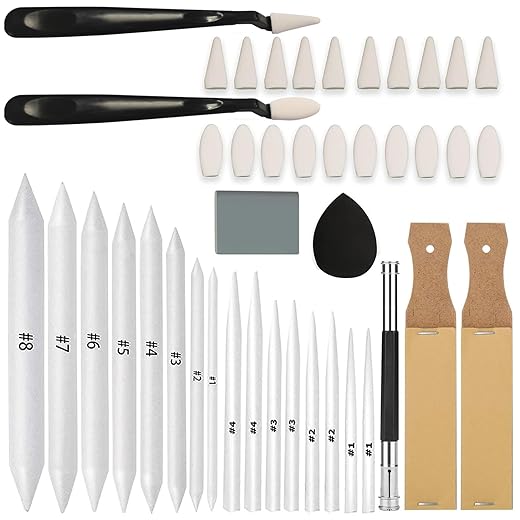
Fantastic. 12 PCS Blending Stumps and Tortillions Paper Art Blenders with Sandpaper Pencil Sharpener Pointer for Student Artist Charcoal Sketch Drawing Tools…and my thoughts.I could draw every day and not get tired of it. Even more so now with this set!I thought I had most of what is in this set here and there in my arenol, but, I di not have anything! Just dozens and dozens of pencils!I was doing a great drawing of Marylin Monroe on 11 x 15 inch paper, Canson heavyweight, which is great for watercolor. That is because it is watercolor paper! I, without thinking, started drawing on it and almost immediately realized I should have used the other side with the smooth texture, not the textured watercolor side. But I was well into my drawing and once I start, that is it! Besides, I would draw with burnt twigs on a piece of trash and get compliments…no, not a braggart but if you do not toot your own horn wisely and correctly you shouldn’t trust when others toot it for you and it builds confidence. I have always prided myself on my talents to make great things out of nothing, use all the wrong materials, and all that…but I have never drawn on watercolor paper on the textured side. And, as I stated earlier, I thought I had blenders and all that but did not…and now I do!These all do exactly what they are supposed to do, are all quality, it is the perfect set for anyone from beginner to someone like myself and they work like a charm on my watercolor paper! They are priced perfectly, come with just what you need, and would be a great gift for anyone who draws…even if they have some like these, they’ll always appreciate more.They have turned my great drawing into an even better one by not using my fingers, which force the graphite down into the little wells that are to hold the water and pigment.I totally recommend these tools in general, and this set.
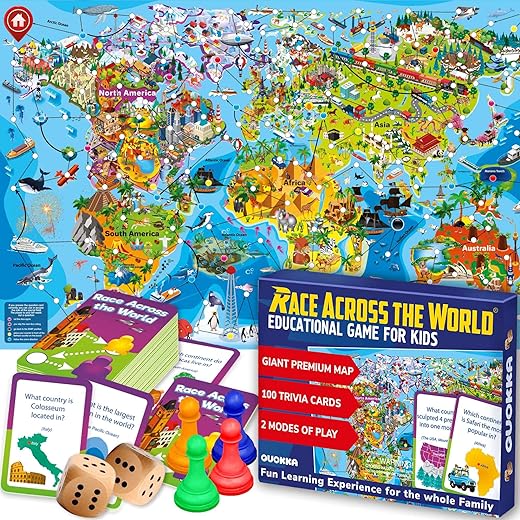
Fun, educational and silly. recently purchased the Giant Floor Board Game for our family, and it has become an absolute hit! If you’re looking for an entertaining and interactive way to spend quality time together, this game is a must-have.Impressive Size and Durability:The first thing that struck me was the impressive size of the game. It’s truly giant, creating a larger-than-life experience that adds excitement to each move. The sturdy, durable material ensures it can withstand the enthusiastic stomping and jumping that comes with the gameplay.Easy Setup and Storage:Setting up the game was a breeze – no complicated instructions or hours of assembly required. The pieces lay flat on the floor, and we were ready to play within minutes. What’s equally impressive is how easily it folds for storage. It’s compact enough to slide under a bed or stand against a wall, saving valuable space.Engaging for All Ages:One of the best features is that it’s engaging for all ages. From our youngest at 5 to the grandparents, everyone had a blast. The game combines physical activity with strategic thinking, making it a perfect way to bridge generation gaps and bring the family together.Versatile Gameplay:We’ve played various games on it – from classic races to more intricate strategy games. The versatility allows us to switch things up and keep the excitement alive. The vibrant colors and well-designed graphics add to the overall appeal, creating an immersive experience.Outdoor or Indoor Fun:Whether we’re indoors on a rainy day or outside in the backyard, the Giant Floor Board Game is our go-to entertainment. The material is weather-resistant, making it suitable for outdoor use. It has become a staple for family gatherings, parties, and even neighborhood playdates.Educational Benefits:Beyond the sheer fun, I appreciate the educational benefits. It promotes teamwork, strategic thinking, and motor skills development in a way that doesn’t feel like traditional learning. It’s a win-win for both parents and kids.
Edge-of-Your-Seat Fun – Another Co-op Winner. We’re on a bit of a cooperative board game kick lately, and Forbidden Island did NOT disappoint! After loving Pandemic, we were looking for something similar, and this one was a blast. The whole “island sinking” thing really amps up the tension – you’re constantly scrambling to keep tiles from flooding while trying to find the treasures. It’s a really fun and unique mechanic.We played with four players, and it was the perfect amount of challenge. Each player has a different role with special abilities, so you really have to communicate and work together to succeed. There were definitely some tense moments where we thought we were going to get swamped, but we managed to pull through in the end! It was a really satisfying feeling to escape with all the treasures.The game is easy to learn, but there’s still plenty of strategy involved. It’s perfect for a family game night or a get-together with friends. We loved that it’s cooperative, so everyone’s working towards a common goal. If you’re looking for a fun and engaging game that will have you on the edge of your seat, Forbidden Island is a great choice. Highly recommend it! Five stars!
GREAT concept, instructions unclear. Love the concept but the instructions weren’t clear, we’ve tried it several different ways and I still don’t think we’re playing it correctly because the instructions actually don’t make sense. Also some of the answers are repetitive especially if you have more than two players. It DID spark some great conversations with my grandkids though and they did learn from it. If there had just been better instructions it would’ve probably been five stars
Great addition for a beginning counselor. Must have for counselors starting out. You get such a bang for you buck with this set of games. The games are straight forward and cover multiple topics. The topics covered are empathy, emotions, manners and friendship. The kids love to play them. The games are well made and have lasted me for years.
Challenging but worth it. Fun to play but definitely challenging. It’s more of a memory game with hints. I’m glad we got this game and it definitely helped us learn and memorize the capitals and state names.
Outstanding, high quality kit and large supply. Outstanding, high quality kit and large suppl.This is the best and most useful kit of blenders I’ve ever had.And what a great price!
Fun and educational. Bought this for my grandsonWe enjoy playing togetherI have learned a lot too!!!
The Social Skills Game That Turns Awkward Moments into Connection. The media could not be loaded. As a homeschool mama raising bright, big-hearted kids, social skills aren’t something I take for granted — they’re something we practice. And this little game has become one of my favorite tools for teaching connection in a world that sometimes forgets how to slow down and listen.We use it during our weekly “Life School” time, and it always sparks laughter, curiosity, and deeper understanding. Each card opens up a real conversation — not just about what to say, but how to listen, how to take turns, and how to show empathy. It’s especially wonderful for neurodivergent kiddos or anyone who benefits from clear, compassionate social guidance.The best part? It doesn’t feel like “therapy” or “training.” It feels like a family moment — full of silliness, honesty, and growth
Quality and consistency. Perfect for my style of artwork. Great product. Thank you.